

16 December 2025
The Top Common Cybersecurity Planning Mistakes Businesses Still Make in 2025 – And How to Avoid Them
In today’s digital landscape, cybersecurity is no longer an optional investment — it is a core business requirement. Yet, many organisations continue to underestimate the scale and sophistication of modern cyber threats.
As an IT solutions provider based in India, we regularly see companies fall into the same avoidable traps when designing their cybersecurity strategies. These mistakes not only expose them to data breaches but also lead to operational downtime, reputational harm, and compliance failures.Below are some of the most common gaps businesses encounter in their cybersecurity planning — and how they can avoid them.
Treating Cybersecurity as a One-Off Project
Many businesses approach their cybersecurity strategy as a single implementation exercise. They stick to traditional practices like installing an antivirus tool, deploying a firewall, or performing a one-time security audit. But cybersecurity is an evolving discipline. Threat actors innovate constantly, exploiting new vulnerabilities and deploying increasingly sophisticated attack methods. A static plan swiftly becomes outdated.
What businesses need instead is a continuous security framework involving regular monitoring, patch management, policy updates, and periodic risk assessments. Creating cybersecurity policies should be treated as an ongoing operational practice, much like finance, HR, or compliance.

Over-Reliance on Technology and Underinvestment in People
It is common for organisations to believe that purchasing advanced tools from the cybersecurity market automatically equates to strong security. Firewalls, endpoint protection, and SIEM platforms are essential, but they are only as effective as the people using them.
Human error remains one of the leading causes of cybersecurity breaches worldwide, including phishing attacks, weak passwords, and accidental data exposure.
Businesses must invest in cybersecurity essentials such as:
- Regular employee awareness training
- Phishing simulations
- Strong access control policies
- Clear reporting mechanisms for suspicious activity
Technology should complement a well-trained workforce — not replace it.
Ignoring Basic Cyber Hygiene
While advanced threats attract attention, many successful attacks exploit very basic weaknesses: unpatched software, outdated systems, default passwords, and unsecured endpoints. For many small and medium businesses, this is where the biggest vulnerabilities lie.
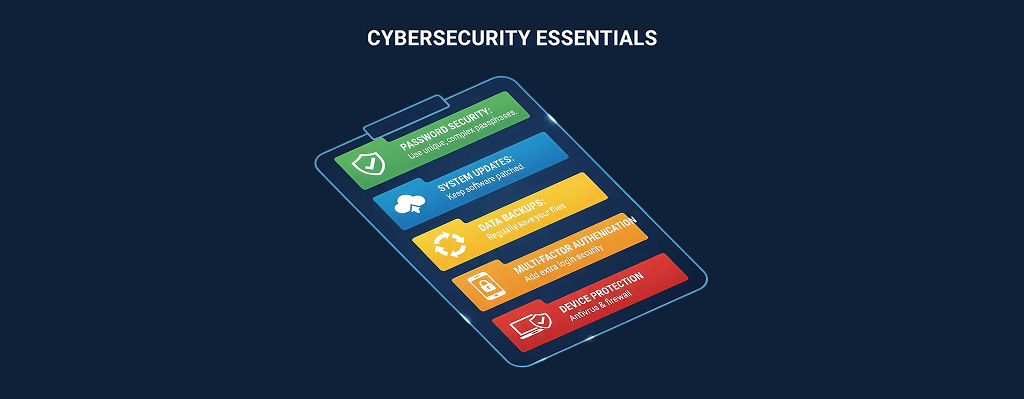
A good frontline policy is to focus on basic cybersecurity objectives and hygiene practices such as:
- Applying security patches promptly
- Enforcing strong password policies
- Implementing multi-factor authentication (MFA)
- Maintaining accurate asset inventories
- Backing up data regularly
Following such cybersecurity guidelines helps form the foundation of an effective defence. Without these fundamentals, even the most sophisticated solutions cannot compensate.
Lack of a Clear Incident Response Plan
A surprising number of organisations have no structured plan for responding to a cyber incident. When a breach occurs, teams often scramble in confusion. Questions about who is responsible for containment, communication, recovery, or legal compliance quickly arise and cause confusion.
An effective Incident Response (IR) plan should include:
- Defined roles and responsibilities
- A step-by-step escalation process
- Internal and external communication protocols
- Legal and regulatory compliance requirements
- A tested disaster recovery strategy
Regular tabletop exercises ensure the plan works in practice, not just on paper. Businesses can conduct mock drills to ensure that in case a security breach occurs, they operate as per standard protocol and tackle the incident with composure and caution.
Underestimating Third-Party Risks
As supply chains become more digital and interconnected, third-party vendors introduce significant cybersecurity risk. A breach in a partner’s system can compromise your own network, even if your internal security is robust.
Businesses frequently overlook security gaps like:
- Vendor security assessments
- Contractual data protection clauses
- Monitoring third-party access
- Shared data flows and integration points
A strong cybersecurity plan must extend beyond organisational boundaries. Having a full-fledged cybersecurity management plan includes digital interactions with other parties and conducting the due diligence to ensure their networks are also secured.
Failing to Align Cybersecurity with Business Goals
Cybersecurity efforts often operate in a silo, disconnected from a broader organisational strategy. As a result, investments are not prioritised correctly, and security measures are sometimes seen as obstacles rather than enablers.
Cybersecurity planning should consider:
- Business objectives
- Operational risks
- Regulatory requirements
- Growth strategies
- Customer expectations
When aligned properly, cybersecurity becomes a driver of trust, resilience, and competitive advantage. Addressing cybersecurity as part of a holistic endeavour to grow and manage a business is the best way to turn it into apriority and ensure that it is applied correctly.
Not Considering Compliance and Data Protection Regulations
With India’s Digital Personal Data Protection Act (DPDPA) coming into force and global regulations such as GDPR affecting international businesses, compliance is becoming a critical component of cybersecurity.
Some organisations treat compliance as a last-minute checkbox exercise, which leads to unnecessary legal exposure and higher remediation costs.
Security and compliance should be integrated from the beginning, not added as an afterthought.
Cybersecurity risk management and planning are not about eliminating all threats—it is about tackling IT safety intelligently. By avoiding these common mistakes, businesses can build a resilient security posture that evolves threats and aligns with operational needs.
For organisations in India and beyond, robust cybersecurity is now a pillar of business continuity and customer trust. The companies that get it right are those that see it not as an IT issue but as a strategic, organisation-wide priority.
At Swan, we have a longstanding reputation helping our clients transform digitally to meet today’s evolving online landscape. Our cybersecurity services encompass the different practices businesses need to integrate into their model to prevent cyber threats and associated damage.
Reach out to us to ensure your organisation is protected with cybersecurity solutions that are effective, compliant, and future-ready.
References
- National Institute of Standards and Technology (NIST). Framework for Improving Critical Infrastructure Cybersecurity, 2023.
- ISO/IEC 27001:2022. Information Security Management Systems.
- ENISA (European Union Agency for Cybersecurity). Threat Landscape Report, 2023.
- CERT-In (Indian Computer Emergency Response Team). Cyber Security Guidelines and Advisories, Government of India.
- Digital Personal Data Protection Act, 2023 (India).
Frequently Asked Questions (FAQs)
1. What are the top cybersecurity challenges for businesses?
Businesses face challenges such as evolving cyber threats, limited security awareness among staff, and inadequate security budgets. They also fail to take complex IT environments and increasing regulatory requirements into account right from the beginning. From securing remote work to managing third-party risks businesses tend to focus on cybersecurity only when the need arises.
2. What kind of cybersecurity mistakes put your business at risk?
Common mistakes include treating cybersecurity as a one-time project, relying too heavily on tools instead of trained people, ignoring basic cyber hygiene, failing to patch systems, using weak passwords, lacking an incident response plan, and underestimating the cybersecurity risks posed by vendors.
3. What are the 5 main threats to a business’ cybersecurity?
Five major threats commonly impacting businesses are:
- Phishing and social engineering
- Ransomware attacks
- Malware infections
- Insider threats (intentional or accidental)
- Data breaches caused by vulnerabilities or misconfigurations
4. What are the 5 D’s of cybersecurity?
- Deter – Discourage attackers through strong policies and controls.
- Detect – Identify suspicious activity early.
- Defend – Implement tools and processes that protect systems.
- Deflect – Limit the impact of attacks through segmentation and redundancy.
- Defeat – Respond and recover effectively to minimise damage.
5. How does cybersecurity affect businesses?
Cybersecurity directly impacts business continuity, customer trust, financial stability, and brand reputation. A breach can lead to downtime, legal penalties, damaged credibility, and loss of clients. Strong cybersecurity, on the other hand, strengthens reliability, competitiveness, and operational resilience.
6. Do all businesses need cybersecurity?
Yes. Every business, regardless of size, industry, or location, handles data that criminals can exploit. Cybersecurity for small businesses is essential because they are particularly vulnerable because attackers often view them as “easier targets.” Any organisation using computers, email, cloud applications, or customer data needs cybersecurity.
7. Why is cybersecurity important in the role of IT in business?
Cybersecurity is essential because IT systems underpin nearly every business function. Without adequate protection, companies risk data loss, service outages, fraud, and regulatory non-compliance. Effective cybersecurity ensures IT systems remain secure, reliable, and capable of supporting growth and innovation.
8. What is the cost of cyberattacks for small businesses?
Cyberattacks can be devastating for small businesses because they often lack the financial and technical resources to recover quickly. Costs typically include:
- Direct financial loss from fraud, ransomware payments, and business disruption
- Operational downtime, resulting in lost revenue
- Data recovery and system restoration expenses
- Legal and regulatory penalties if customer or sensitive data is exposed
- Reputational damage, which can lead to customer churn
- Increased insurance premiums and future security spending
9. How to defend against AI phishing attacks?
AI-powered phishing attacks are more sophisticated, personalised, and difficult to detect. Businesses should use advanced email security filters, security protocols, and threat-intelligence tools to detect sophisticated attacks. Equally important are human defences such as regular phishing-awareness training, simulations, clear reporting channels, and zero-trust access controls.


